Description
Rattanaprakotap Wealth-Attracting Takrut
Ancient Broken Drum Skin Takrut Blessed by Luang Pu Chuan, Wat Khao Kaew
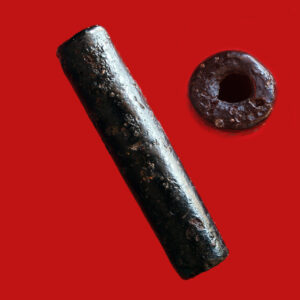
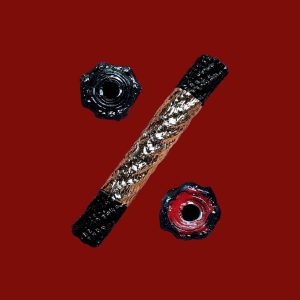
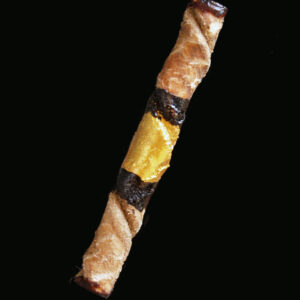
Among traditional Thai sacred objects, few materials are regarded as spiritually potent as ancient drum skin, particularly when the drum has fulfilled its ritual purpose and naturally broken with age. The Rattanaprakotap Wealth-Attracting Takrut is crafted from the skin of a ceremonial drum estimated to be over one hundred years old, carefully rolled into a compact spiral talisman and consecrated for compassion, prosperity, protection, and success in livelihood.
This rare takrut was blessed by Luang Pu Chuan of Wat Khao Kaew, Ang Thong Province, a revered monk widely recognized for his quiet power, deep compassion, and mastery of ancient esoteric knowledge. Measuring approximately 3.2 cm in length and 0.5 cm in thickness, this is a small but exceptionally meaningful sacred object, traditionally carried close to the body.

Sacred Meaning of Broken Drum Skin
In ancient Thai belief, ritual drums are not merely musical instruments. Each drum is believed to be inhabited by protective deities and empowered by Pho Phu Prakon Thap, the divine master of leather craftsmanship. Over time, as the drum absorbs blessings, chants, and ceremonial energy, its power accumulates. When the drum skin eventually breaks through age and ritual use, its spiritual force is believed to reach its peak.
Takrut made from broken drum skin are traditionally associated with:
-
Wealth expansion and continuous fortune
-
Compassion and popularity
-
Business growth and trade success
-
Personal safety and protection
-
Neutralizing weapons and physical danger
The symbolism is clear: just as sound once spread far and wide from the drum, so too will reputation, fortune, and blessings radiate outward from the bearer.
Blessing and Personal Consecration
This particular takrut was acquired directly from Wat Khao Kaew and retained for an extended period by the original holder. What makes it especially significant is that Luang Pu Chuan personally bestowed an unusually long and detailed additional blessing, a gesture rarely given and deeply treasured by devotees. This act alone inspired immense confidence in Luang Pu’s spiritual attainment and reaffirmed his status as a genuine practitioner of ancient monkly discipline.
In traditional monastic practice, such spiritual authority is not assumed lightly. Monks of this caliber undergo years—often decades—of rigorous discipline, study, meditation, and testing before attaining the right to perform blessings of this depth.
About Luang Pu Chuan
Luang Pu Chuan was the nephew and direct disciple of Luang Pho Chaem of Wat Takong, one of the most respected masters of the Tha Chin River basin. He inherited sacred knowledge directly from handwritten scriptures passed down within this lineage.
Despite his reputation, Luang Pu Chuan lived humbly and avoided recognition. He declined titles, positions, and honors offered by the Sangha hierarchy, choosing instead a life of service and spiritual practice. His approach to consecration was subtle—often silent—but devotees frequently report experiencing his compassion immediately upon receiving his blessings.
He is also credited with restoring Wat Khao Kaew, a temple once burdened by ancient spiritual afflictions. Through years of dedicated practice, the temple was transformed into a place of peace, stability, and growth.
A Life of Merit and Protection
Throughout his monastic life, Luang Pu Chuan contributed extensively to Buddhism, including the construction of schools, rural temples, and large Buddha images. He was known to release amulets only when conditions were spiritually appropriate, never for personal gain.
One widely reported incident in 2005 cemented his reputation nationwide: during a daytime robbery, assailants attempted to shoot him at close range, yet the firearm failed repeatedly. The event was covered by major Thai media outlets, leading locals to refer to him as “The God of Pho Thong”, a testament to his perceived invincibility and spiritual protection.
An Auspicious Offering for Worship
The Rattanaprakotap Broken Drum Skin Takrut is traditionally revered for its ability to bring prosperity, safety, and compassion into the life of the bearer. It is not merely an amulet, but a piece of living tradition—one shaped by time, ritual, and the quiet strength of a master monk who sought no fame.
This takrut stands as a meaningful object for those who value authentic lineage, ancient materials, and blessings rooted in genuine monastic discipline.