Description
Naga Bound Takrut “Duang Dee Tawee Sap”
Blessed by Kruba Duangdee, Wat Tha Champi, Chiang Mai
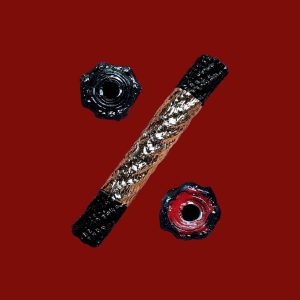
The Takrut Naga Baat (Ouroboros Naga), edition “Duang Dee Tawee Sap”, is a rare Lanna talisman of exceptional spiritual standing, created and blessed by Luang Pu Kruba Duangdee of Wat Tha Champi, Chiang Mai Province. Revered as the final direct disciple of Kruba Sriwichai, Luang Pu Kruba Duangdee was honored as a senior monk of Chiang Mai, attaining the venerable age of 104 years, and widely respected for his impeccable discipline, moral conduct, and mastery of ancient Northern Thai sacred sciences.

Lineage and Spiritual Authority
Luang Pu Kruba Duangdee stands as a living continuation of the Lanna monastic lineage established by Kruba Sriwichai, the most revered monk in Northern Thailand. His reputation was firmly rooted in deep meditative practice, ascetic discipline, and profound knowledge of ancient Lanna yantra and takrut traditions, particularly those associated with protection, prosperity, and Naga-based cosmology.
Because of the complexity and spiritual danger associated with its creation, the Takrut Naga Baat can only be produced by masters of exceptionally strong spiritual attainment. Luang Pu Kruba Duangdee was among the very few capable of doing so correctly and safely.
Sacred Material and Symbolism
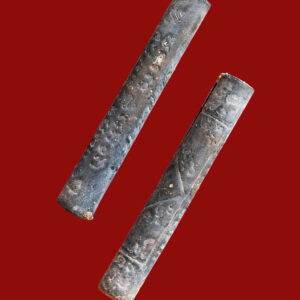
This takrut is crafted from naturally deceased python skin, meticulously hand-inscribed with sacred yantra. Importantly, the python was not killed or harmed, in accordance with strict ethical and spiritual requirements. In Lanna tradition, this condition is essential to ensure the purity and balance of the talisman’s power.
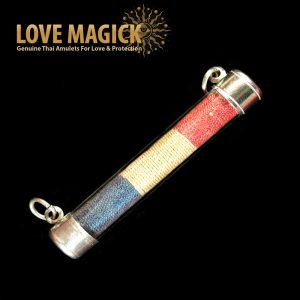
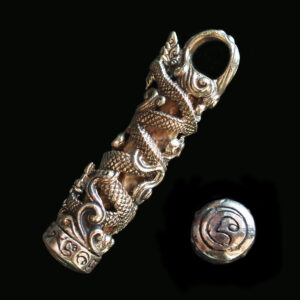
The python skin is then rolled and encased within a takrut tube designed to represent intertwined Nagas consuming their own tails, an ancient symbol known as Naga Baat (the serpent eating its tail). In Lanna scriptures, this image signifies:
-
Endless wealth and sustenance
-
Continuous circulation of fortune
-
Protection without depletion
-
Prosperity without exhaustion
It is traditionally described as “having use and wealth without end.”
Rituals and Consecration Ceremonies
The Takrut Naga Baat Duang Dee Tawee Sap underwent two major consecration phases, combining both Devābhiseka (divine empowerment) and Buddhābhiseka (Buddhist consecration).
First Consecration
-
Yi Peng Festival (Double Full Moon)
-
2 November 2009 (B.E. 2552)
-
Included the ritual preparation of In Kaew Maha Saneh sacred wax
-
Conducted within the vihara of Wat Tha Champi
Second Consecration
-
Full Moon Wednesday, 2 December 2009 (B.E. 2552)
-
A highly auspicious date marking the legendary emergence of Phra Maha Thera Upagupta from deep meditative absorption beneath the great ocean
-
Conducted at the ceremonial grounds of the Great Nine-Spired Reliquary Chedi, Wat Tha Champi
-
Attended by 12 eminent Lanna meditation masters
Participating masters included:
-
Luang Pu Kruba Duangdee, Wat Tha Champi
-
Brahmin Master Por Kru P. Liam Phetcharat
-
Phra Ajarn Thong, Wat Phra That Si Chom Thong
-
Kruba Noi, Wat Sri Don Mun
-
Luang Pu Nen Khamphiro
-
Kruba Chantrangsi, Wat Ku Tao
-
Kruba Subin, Wat Thong Sa-at
-
and many other respected meditation masters
Spiritual Attributes and Benefits
According to ancient Lanna texts, the Takrut Naga Baat (Python Skin) is regarded as the highest form of wealth talisman, extremely difficult to create and rarely encountered. When venerated with sincerity, it is believed to provide:
-
Comprehensive protection from danger and harm
-
Strong deterrence against physical and spiritual threats
-
Favor and compassion from humans, devas, spirits, and living beings
-
Growth in wealth, assets, and financial stability
-
Success in trade, business, and livelihood
-
Continuous prosperity symbolized by the serpent consuming its tail
The presence of the Naga is traditionally associated with coolness, balance, and abundance, offering both protection and nurturing fortune.
Traditional Method of Veneration
To venerate the takrut, practitioners traditionally recite Namo Tassa three times, followed by the incantation:
“A-um-a
Namo Buddhaya
Naka Nako Sodaya Udurati”
Luang Pu Kruba Duangdee
It is a great loss to the Thai Buddhist monastic community as one of the most senior and respected Buddhist monks in Thailand, a disciple of the revered Khru Ba Chao Sriwichai, the saint of Lanna, passed away on the morning of Saturday, February 6, 2010.
Luang Pu Kruba Duangdee Subhatto was born at Ban Tha Champee, Tambon Thung Satok, Amphoe San Pa Tong, Chiang Mai Province on April 26, 1906, during the reign of King Chulalongkorn (Rama V), which coincided with the time of Chao Inthawichayanon (Chao Maha Chiwit), the ruler of Chiang Mai.
At the age of 11, he accompanied his parents to offer alms and food to the Venerable Kruba Chao Sriwichai during the time the Venerable Kruba Chao was detained by the government at Wat Phra That Hariphunchai on charges of being an unlicensed ordination master, lacking the necessary permits for ordaining monks.
When the Venerable Abbot saw the boy, Duangdee, he called him over and told his parents, “Take him back and enroll him in the temple. In the future, he will be a source of support and respect.” This was a most precious blessing that the Venerable Abbot bestowed upon the boy, Duangdee.
Afterward, the parents took the boy, Duangdee, to become a disciple of the abbot of Wat Tha Champee, which was near their home. The abbot taught him until he could read and write.

Later, at the age of 13, the boy Duangdee was ordained as a novice monk by Phra Khru Sopha, the abbot of Wat Tha Champee, who was a fellow Dharma practitioner with Phra Khru Chao Sriwichai.
Then, Kruba Sopha took him to live with Kruba Chao Sriwichai to serve him, study, pray, and practice meditation. At that time, Kruba Chao Sriwichai was restoring and renovating various temples in northern Thailand.
When novice monk Duangdee reached the age of 21, he was ordained as a Buddhist monk. Around that time, Kruba Chao Sriwichai faced various accusations and charges. After being tried, Kruba Chao was acquitted of all charges and returned to Lamphun. He did not stay long afterward, passing away at Wat Chamadevi at the age of 61. At that time, the monk Duangdee was 32 years old.
Since then, Phra Phiksu Duangdee has built various temples following the example set by his teacher, Kruba Chao Sriwichai, who practiced throughout his life. He also followed Kruba Chao Abichai (Pha Khao Pi) in building the vihara at Wat Tha Champee.
Later, at the age of 42, he was appointed abbot of Wat Tha Champee and head of the Thung Satok sub-district. At the same time, he did not neglect the practice of Vipassanā meditation, in which he was already highly skilled.
In addition to Wat Tha Champee, Phra Khru Duangdee has also provided assistance in the restoration and renovation of various monastic buildings in nearby temples. He has also consistently supported the construction of roads, schools, and hospitals.
He was appointed as a probationary Phra Khru (ecclesiastical title) and head of the sub-district, later promoted to the rank of Phra Khru Sanyabat (second class) as Phra Suphatthasilakun. He continued to receive promotions in ecclesiastical rank until, in 2007, at the age of 102, he was granted the royal title of Phra Ratchakhana (ordinary class) as Phra Mongkhon Wisut.
Throughout his life, Luang Pu Kruba Duangdee has consistently contributed to the development and prosperity of Buddhism and shown compassion to his disciples