Description
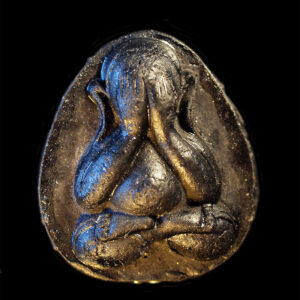
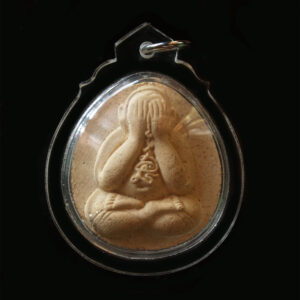
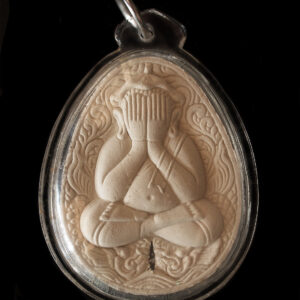
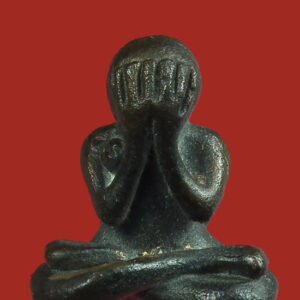
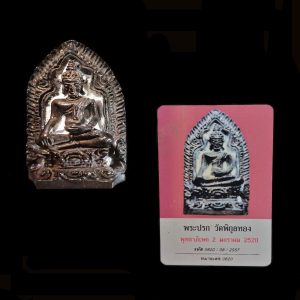
Pra Pitda
พระปิดตาน้ำหมากพระพุทธเจ้า หลวงปู่คำพันธ์ เนื้อดินเก้าบัง ปี2536
The Phra Pidta amulet made from Nine-Stream Clay and betel nut paste. It is crafted from clay collected from nine different locations, specifically from the center of a stream or body of water. (Nine Bangs) “Nine-Bang Soil” is soil that the Venerable Monk specifically instructed his disciples to collect from the center of the river in nine villages or districts that contain the word “Bang” (meaning “above” in Thai). Each time, they had to hold their breath and dive underwater to scoop it up, and they could only do it once; they were forbidden to surface and go back in again. The nine “Bang” locations had to have auspicious names. The term “Bang” refers to blocking or suppressing evil, meaning to ward off all negativity.
A highly auspicious and sought-after amulet with many proven experiences. Extremely rare and in beautiful, original condition.
Luang Pu Khamphan Khosapanyo of Wat That Mahachai, Nakhon Phanom, was one of the disciples of Phra Ajarn Sao Kantasilo, and is widely respected throughout the Isaan region and Thailand. This is evident in the construction of Wat That Mahachai, which he began in 1952 and which has flourished to this day. Furthermore, the numerous amulets he created have been commissioned by individuals, groups, and various government and private organizations, demonstrating their deep faith in Luang Pu

Symbolism and the Pitda Tradition
In ancient practice, artisans sometimes combined the Pitda posture with symbolism associated with Sangkajjaiyana, the Buddha of happiness and abundance, to intensify wealth-attracting resonance while maintaining protective power. For this reason, Pra Pitda amulets are revered both as spiritual protectors and bringers of material blessings.